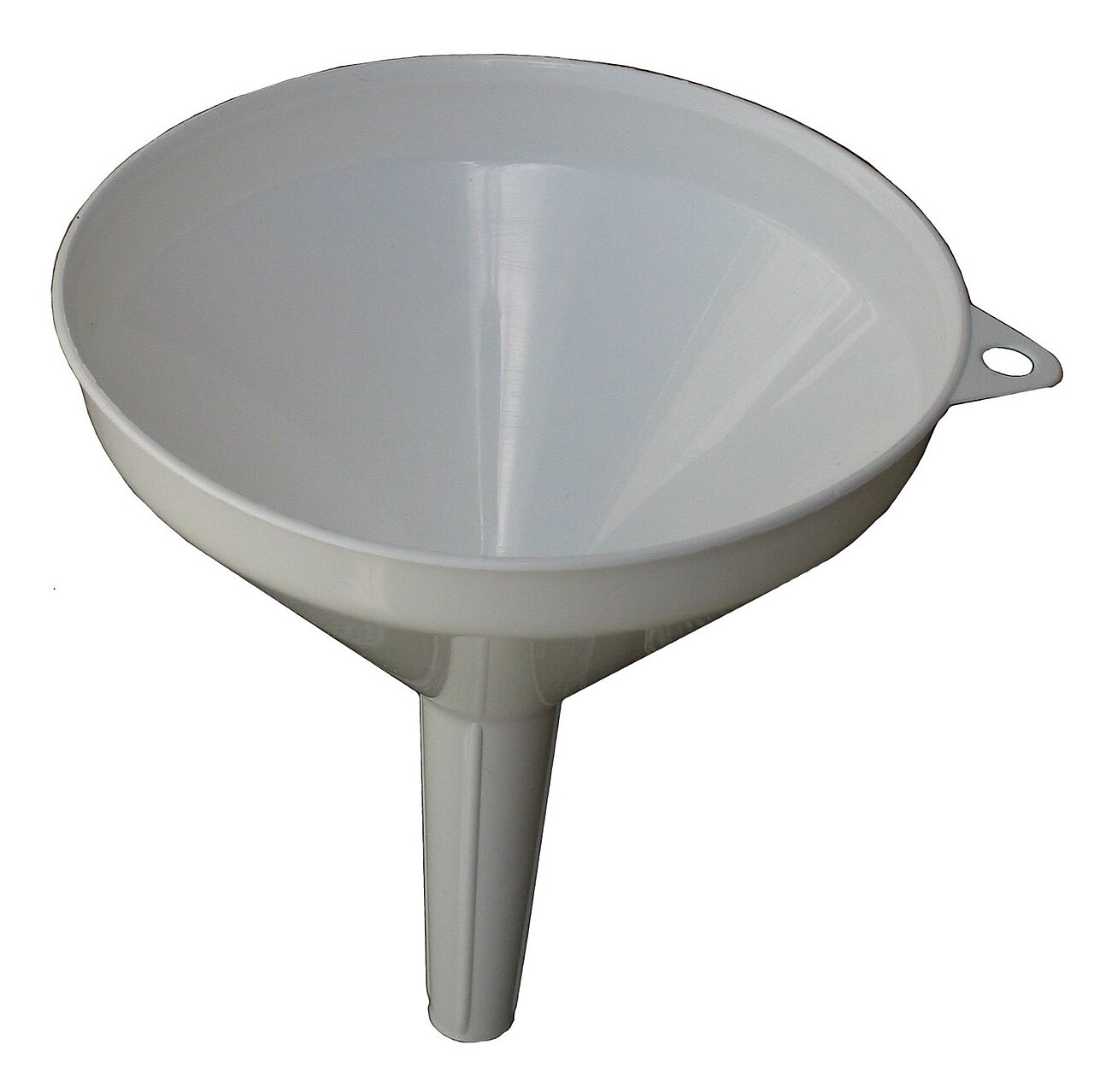
Choose a kitchen funnel around the container opening and what needs to pass through it—not simply the size of its bowl. For bottles, prioritize a compatible stem and an air-escape feature; for jars and chunky ingredients, look for a wide outlet and supported seating. These priorities reflect the different designs of OXO’s bottle-funnel set and adjustable jar funnel.
Start with your containers, not a matching set
Set out the bottles and jars you actually refill. Choose one frequently used container and the narrowest opening as your reference points. A funnel that suits a broad pantry jar may not fit a slim bottle, so treat those as separate fit checks rather than assuming one tool covers both.
Before shopping, record the inside width of each opening. Then ask for the funnel’s outside stem width, including any ribs, and its insertion length. For a tapered stem, ask about the width where it would meet the container rim, rather than just the tip.
Treat missing measurements as an unanswered fit question. The reviewed OXO bottle-funnel listing gives bowl capacities but does not provide stem dimensions in its specifications. Capacity alone therefore cannot confirm whether your smallest bottle will accept it. OXO funnel-set specifications
For bottles, look beyond a small tip
The OXO 3-Piece Multi-Purpose Funnel Set contains two funnels and a detachable strainer—not three funnel sizes. OXO describes soft ribs on the necks that help secure the funnels while allowing air to escape during pouring. That is a useful feature to look for when bottle refilling is your main task. OXO Multi-Purpose Funnel Set
My buying priority would be confirmed stem fit first, ventilation second, and bowl size third. Avoid choosing the largest bowl merely because it sounds more versatile. Instead, consider whether you would be comfortable supporting your usual container beneath it.
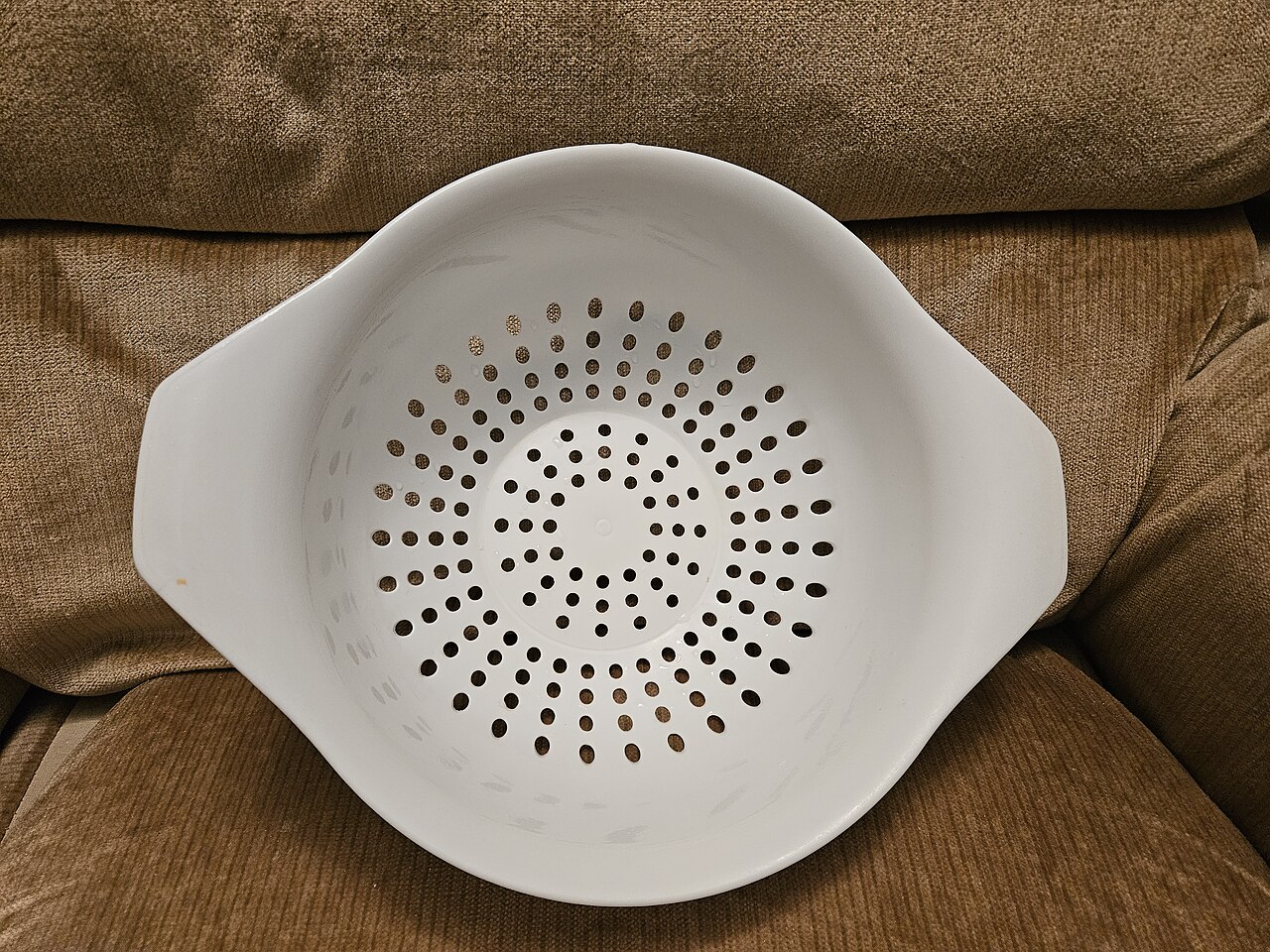
The removable strainer is worth considering if you sometimes want to intercept solids. However, OXO does not specify its filtration fineness on this page; do not assume it will catch very fine particles. Decide whether straining is genuinely part of your routine before treating the accessory as a deciding advantage. OXO Multi-Purpose Funnel Set
For jars, prioritize the passage and the support
OXO’s Adjustable Funnel has a broad bowl and wide neck intended for larger ingredients, including chunky jams and tomatoes. Its collar supports the funnel on the jar, while a lifting tab provides a place to grasp it when moving between containers. Those features make it a more relevant design to consider for repeated jar filling than a bottle-focused set. OXO Adjustable Funnel
When comparing jar funnels, ask two separate questions: will the outlet accommodate your ingredients, and where will the funnel rest on your jar? Do not let a generous-looking upper bowl substitute for checking the narrower passage beneath it.
Make storage part of the fit check
Think about where the funnel will live between uses. Measure the storage space as well as the container opening; a broad bowl or projecting handle needs its own clearance. Decide whether you want the tool close to the bottles you refill or with the rest of your measuring equipment.
For a set with a detachable strainer, plan a place for the loose part. Ask the manufacturer whether the pieces nest or lock together, and request the assembled measurements if a drawer is shallow. A photograph of several pieces stacked together does not confirm the complete storage footprint.
Your before-ordering checklist
- Name the main job: bottle refilling, jar filling, or both.
- Record container-opening measurements and request missing stem dimensions.
- Check where the funnel will rest and where your supporting hand will go.
- Count actual funnels separately from strainers, collars, and other accessories.
- Confirm the complete storage footprint, including handles and loose parts.
- Read the exact product’s care and intended-use instructions before ordering.
Start with the design that solves your most frequent transfer problem. Add another only when you can identify a container or ingredient the first one will not accommodate.