Start with access, not maximum storage
Plan your under-sink storage around three tests: where an organizer can sit, how you will reach its contents, and how you will remove it. Make passing all three your buying rule rather than choosing the largest organizer that appears to fit.
This guide focuses on physical fit and access for items such as spare brushes, cloths, and trash bags. It does not assess which cleaning products belong together or whether an organizer’s material is suitable for containing them.
Measure separate spaces around the plumbing
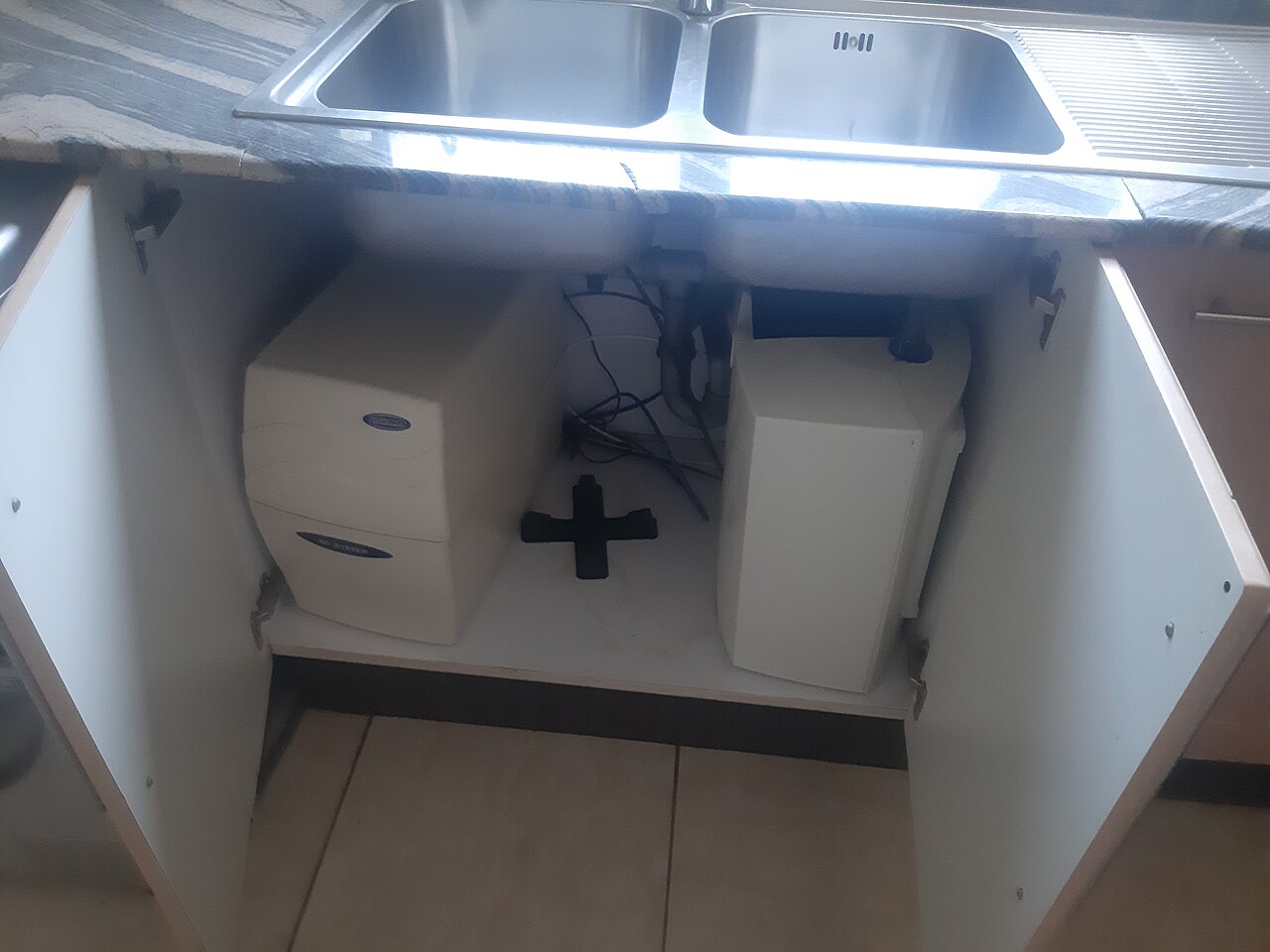
Take loose items out and sketch the cabinet from above and from the front. Mark the pipes, disposal if present, hoses, valves, hinges, and center door stile. Treat these as boundaries, not things to reposition for storage.
Use this measurement worksheet for each possible organizer location:
- Usable width: measure the clear space beside the plumbing, not just the cabinet’s overall interior width.
- Usable depth: measure from the closed-door position to the first obstruction along the organizer’s proposed footprint.
- Usable height: check above the front and rear of that footprint, including below pipe bends and the sink bowl.
- Door opening: measure the passage available with the doors in their normal open position, accounting for hinges and any center stile.
- Removal path: identify where your hand will grip the organizer and where the loaded organizer will travel on its way out.
Record the left and right sides separately. For your first layout, try independent storage zones rather than assuming one organizer should span the whole cabinet. Reserve access to valves and plumbing connections instead of filling every remaining gap.
Compare shapes with actual dimensions
A removable rectangular bin is worth considering when your plan calls for bringing a group of supplies out together. OXO lists its Storage Bin at 14.25 × 8.95 × 4.55 inches. Use those listed dimensions to make a cardboard footprint before buying; do not substitute the size of the items you hope to put inside. OXO Storage Bin
OXO describes that bin as easy to transport and suitable for organization beyond the kitchen, including the laundry room and bathroom. That supports considering it as a general-purpose removable bin, not as a purpose-built rack that fits around pipes. Its suitability for your cabinet still depends on your measurements. OXO Storage Bin
For a clear area where you prefer rotating contents toward the door, compare a turntable. OXO’s 11-inch model has listed dimensions of 11 × 11 × 1.5 inches and is intended for countertop or cabinet use. Mark its circular footprint on your sketch. OXO 11-Inch Turntable
The same model has non-slip feet and a raised ledge to help retain items. Those features do not establish clearance for your particular contents: in your mock-up, check the full turning path at the height of the tallest item, not only at the base. OXO 11-Inch Turntable
My planning preference is a removable bin when taking everything out together matters most, and a turntable when accessing individual items in place matters more. Neither should require reaching awkwardly around plumbing.
Rehearse removal before ordering
Build up your cardboard footprint with an empty box approximating the organizer’s height. Add lightweight stand-ins for the tallest planned contents, then rehearse everyday access without touching or forcing anything against the plumbing.
- Can you reach the intended grip without squeezing your hand beside a pipe?
- Can the loaded shape pass through the door opening?
- If removal requires lifting, is there room above it?
- Can you take it out without emptying another storage zone first?
- Can you close both doors without contact?
Choose the smaller option if the larger mock-up only works after repeated tilting or rearranging. Prioritize a straightforward removal path over theoretical capacity.
Check assembly instructions before choosing a rack
For a tiered or pull-out organizer, request the exact model’s assembled dimensions and instructions before buying. Look for upright and crossbar positions, drawer travel, attachment requirements, and the space needed to remove baskets. Do not assume that adjustable width means adjustable pipe clearance.
Manufacturer instructions can reveal requirements that a footprint misses. For example, OXO’s Expandable On-the-Wall Organizer manual requires room at one end to slide components off for reconfiguration and specifies that its supplied screws and anchors are for drywall. That is not permission to mount it on a cabinet door or wall. OXO installation instructions
The sources reviewed provide dimensions for the bin and turntable, but not verified assembly instructions for a dedicated pipe-clearing under-sink rack. These are therefore layout candidates, not a rack recommendation. Start with one organizer that passes your footprint, door, and loaded-removal tests; add another only after the first arrangement proves convenient.